Top 10 Trends In Urban Living, Which Will Shape Cities All Over The World Between 2026 And
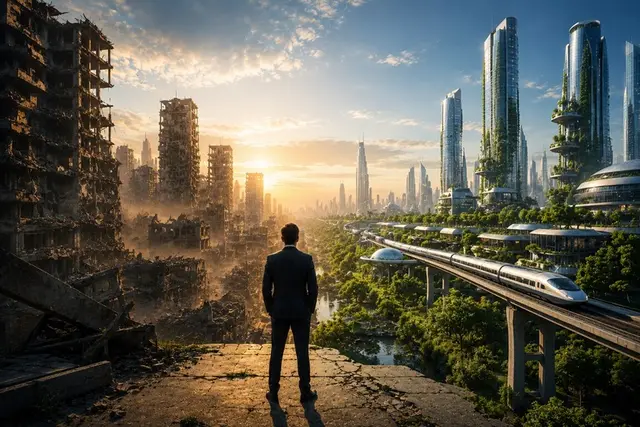
Cities have always been the most complex and significant invention. They are a place where people, ideas of problems, ideas, and possibilities in ways that only one other form for human settlement can equal. The urban area of 2026/27 are being transformed by a combination and forces both interesting and threatening: climate pressures demanding fundamental changes to the ways in which cities are constructed and run. Technology is providing new ways of dealing with urban complexity, shifting patterns of work and mobility which are transforming how people use urban space, and a growing demand for cities which work better for those who live in them instead of just passing across or planning to invest in their development. Here are 10 urban living trends that are changing the way cities function across the globe in 2026/27.
1. The 15-Minute City Concept Gains Practical Traction
The concept that urban living should be organised so that everything residents require on a daily basis such as work, education, shopping, healthcare and green spaces, as well as social infrastructure, are accessible within 15 minutes of walking or cycle distance from their homes has been shifted from the realm of urban planning to real-world policy in a rising range of metropolitan areas. Paris is a prime case, but different versions of this idea are being implemented throughout Europe, Latin America, and parts of Asia. There are some who have expressed reservations about the potential of such models to restrict movement but the principle behind it, making cities based on human size and everyday life, instead of auto dependence, is beginning to gain significant mainstream support.
2. Housing affordability is a driving force behind bold policy Experiments
The housing affordability crisis affecting major cities around the world has reached an extent that is forcing policy responses far more expansive than those that have been seen in recent years. Zoning changes, density bonuses with affordable housing standards, mandatory subsidies land value taxes, building social housing on a larger scale as well as restrictions on leasing platforms for short-term rentals are being implemented in a variety of combinations as cities seek out strategies which will effectively shift the dial. One solution isn’t to be universally effective and the economics of housing reform remains a bit contested. However, the realization of the fact that doing nothing is not any longer an option resultant in a lot of policy experimentation that, over time is beginning to provide learnings.
3. Green Infrastructure Becomes Core Urban Design
Urban greening has evolved from an afterthought for cosmetics to an essential component of how cities make plans to improve climate resilience, quality of life, and public health. Expanding the canopy of trees, green walls and roofs, urban waterways, pocket parks and daylighting of buried waters are all being incorporated into urban design on levels that reflect the many purposes that green infrastructure has to serve. It lowers the urban heat island effect as well as manages stormwater and improves air quality. helps to increase biodiversity, and provides real benefits to mental and physical health of urban people. Cities that invested in green infrastructure a decade ago are already showing results which are now accelerating the adoption of green infrastructure elsewhere.
4. Urban Mobility Changes to Active And Shared Transport
The dominance of the private vehicle in urban space is under threat greater than at any previous point. The number of cyclists is increasing rapidly throughout Europe and also in various other regions. E-bikes and e-scooters are crucial components for urban transportation in many cities. In the last few years, public transportation investment has increased in response to both sustainability goals as well as the fact that car-dependent cities are unable to function efficiently at the densities urban expansion requires. The transformation process isn’t always smooth and often contentious. However, the direction is clear: cities are gradually taking space away from private cars and shifting it towards people as active travelers, as well as more shared mobility options.
5. Mixed-Use Development replaces Single-Use Zoning
The legacy of 20th-century urban planning, which firmly separated residential industries, commercial, and areas, is being reversed in city after city. Mixed-use development, which combines housing, work spaces together with hospitality, retail as well as community facilities, within the same neighbourhoods and buildings, can create more lively, walkable and financially resilient urban areas. The shift has been accelerated through the decline of demands for office districts that are solely used for business and shopping monocultures due to changes in shopping and working habits. Former business districts are now being reconfigured as mixed neighbourhoods and new developments are needed to accommodate a variety of functions from the beginning.
6. Smart City Technology Matures Into Practical Use
The concept of a smart city has spent some time creating hype rather than tangible results. The ambitious sensor networking and information platforms frequently not delivering tangible improvements to urban living. The development of technology and the more pragmatic approach to deployment is resulting in greater value-added applications. Intelligent traffic management which reduces congestion and emissions, predictive maintenance systems that solve infrastructure problems before they develop into breakdowns, real-time quality of air monitoring which provides information for public health intervention as well as digital platforms that make city services more accessible can all be proving measurable benefits in the cities that have adopted these systems with care.
7. Urban Food Production Scales Up
Urban food production is now a rooftop activity to a serious component of the city’s food policy in some of the most forward-thinking municipalities. Vertical farms that employ controlled-environment agriculture produce green and herbs in converted warehouses and purpose-built buildings that require a fraction of the water and land required in conventional agriculture. Community growing spaces including school gardens and urban orchards serve the educational and social aspects of food production. The proportion of a city’s consumption of food can be met by urban production remains limited, however, the direction that is taking towards short supply chains, improved food security and stronger connection between urban residents and food systems, is evident.
8. Inclusionary Design Pushes Up The Urban Agenda
The principle that cities should be designed to work for all residents, including disabled children, as well as those with a low level of income is receiving more interest in urban planning circles. Age-friendly city frameworks are being developed, as are universal design guidelines for transport and public space co-design processes which involve marginalised communities in shaping their neighborhood, and affordability requirements that prevent the exclusion of residents who have lived for a long time from upgrading areas are becoming more important. The recognition that a city is only designed for able-bodied, the young, as well as the wealthy, is failing the majority the population it serves is leading to more inclusive strategies for the design of urban areas and governance.
9. The Night-Time Economy Gains Smarter Management
Cities are paying closer at what happens after the darkness. The economy of the night, including hospitality, entertainment arts and cultural venues, as well as the service providers who keep cities functioning overnight is a significant source of economic activity along with cultural and social value, which has traditionally been managed poorly. Specially appointed night mayors or economy commissioners who are currently based in cities from Amsterdam to Melbourne will advocate for those interests of business owners and citizens at the same time, facilitating disputes and establishing policies that will help create a thriving nighttime city without making life unbearable even for those who require sleep. The framework is proving exportable and is becoming more powerful.
10. Community And Belonging Drive Urban Renewal
Between the physical and technological dimensions of urban change lies the fundamental social problem. Most city dwellers and residents, particularly in rapidly changing urban environments have a sense of disconnection from those around them. A growing number of urban practice focuses on establishing Social infrastructure, community centres market, libraries, open spaces, and a deliberate programing that encourages authentic human connections in urban areas. The most successful urban renewal projects today are those that combine physical improvement and a sustained investing in community development, realizing that a neighborhood is ultimately constituted by its relationships and structures.
Cities will always be the principal arena through which humanity’s most important challenges are confronted and the most important opportunities are seized. The patterns above don’t offer a utopia; the changes that they represent are partial, contested and unevenly distributed throughout diverse urban settings. However, they do point to cities which are, in an increasing number of places, becoming more liveable eco-friendly, more sustainable, as well as more genuinely flexible to the demands of those who live there. For further detail, explore the leading To find additional context, explore some of these respected nzcurrent.nz/ to find out more.
Ten Social Media Changes Driving How We Connect In 2027
Social media is now such a part of the everyday life that detaching its influence from culture at a larger scale is becoming increasingly difficult. It has an impact on how people form opinions and build identities or identities, consume entertainment and stories, build relationships, and even participate in public affairs. The platforms themselves evolve quickly driven by regulation, competition, and the relentless desire to attract and hold the attention of humans. What’s expected in 2026/27 is a landscape of social media that is a lot more fragmented more awash in AI, and more crucial than at any earlier time. Here are the ten new trends in culture and social media going into 2026/27.
1. AI-Generated Content Floods Every Platform
The volume of AI-generated content on various social media sites has reached an extent that is fundamentally altering the way we consume information. Videos, images, written posts, and whole accounts that produce content made up of synthetic material at rapid speed have become an essential feature of every major platform. The consequences vary from relatively harmless, AI-assisted authors creating more content faster while also causing a corrosive effect synthetic false information, fabricated personas and fabricated consensus operating at levels that human moderation cannot keep pace with. The ability to distinguish between AI-generated and human-generated content is being viewed as a technical challenge and a key cultural ability.
2. Short-Form Video Remains Dominant But Evolves
Short-form videos have established themselves as the dominant content format of the moment, and it will remain so until 2026/27. What are changing is the high-end of both the content and the viewers that consume it. Creators are coming up with more nuanced designs within the short-form restriction while audiences are showing growing interest in more substantial information that uses the format effectively instead of simply optimizing for the initial three seconds of their attention. The platforms themselves are trying out with longer formats and deeper engaging mechanics to try to expand beyond scroll and establish the kind of constant time on the platform that is translating into commercial value.
3. The Economy of the Creator matures and stratifies
The economy of the creator has morphed into an important economic sector however, the distribution of its rewards has shifted to a more even distribution. It is true that a relatively small proportion of creators in the top tier of the focus economy make an income that is substantial, while the vast middle tier struggles in converting audience into sustainable revenue. Platform algorithmic shifts, increasing content saturation, and the difficult task of standing out in an environment in which AI could replicate content on the surface at no cost are constantly increasing competition on mid-tier creators. The most resilient creative businesses in 2026/27 are those built with genuine community involvement, an exclusive views, and direct commercialisation models that reduce dependency on the platform’s algorithms.
4. Decentralised And Alternative Platforms Gain Ground
Apathy towards centralised platforms, driven by concerns about algorithmic control, data privacy, content issues with moderation and the concentration of power in a tiny amount of tech companies is fuelling the growth of alternative social platforms that are decentralised. Social networks with federation based on transparent protocols as well as niche communities with specific interest groups and subscription-based models which align incentives on platforms with user value rather than demands from advertisers are all making an impact on the lives of users. Mainstream platforms hold huge advantage in scale, but the ecosystem surrounding them is expanding in terms of diversity.
5. Social Commerce is now a primary shopping Channel
The incorporation of retail sales directly into social media feeds or live streams as well as creator content has led to an influx of shoppers that is notably evident among the young people. Social commerce, which allows for discovering the products and making purchases without leaving a platform, is expanding quickly across every major social channel. Live shopping models, first developed in Asia and now expanding worldwide incorporate retail and entertainment with a focus on results in conversion and high levels of engagement. For brands, the influencer-influencer relationship has evolved from awareness marketing into direct sales channels with an measurable attribution of revenue.
6. Raw Content and Authenticity Resist Polish
A direct response to the decades of highly produced, aspirationally designed social media content is increasing the demand for authenticity realness, spontaneity and imperfections. Content creators who are unfiltered in which they express genuine uncertainty and lives that appear very real, rather than aspirationally impossible are now attracting a large audience which polished content struggles to attain. The issue is not one of a general disdain for quality but rather an rethinking of what the term “quality” signifies in a culture where authenticity itself is becoming a source of competitive advantage. The fact that authenticity in its raw form is able to be constructed as well like any other type of content isn’t lost on the more self-aware parts of the internet.
7. Mental Health And Platform Design Face Greater Scrutiny
The relationship between the use of social media and the mental state, specifically with regard to young people is generating significant research, regulatory focus, and public debate. Age verification rules, tools for logging screen time and algorithmic transparency requirements and restrictions on certain recommendations for content are being implemented or actively considered across a wide range of jurisdictions. The design decisions of platforms that exploit psychological weaknesses to increase engagement are facing scrutiny that is causing genuine shifts in how products can be designed and governed. The disconnect between what platforms know about the results of their design decisions and the information they release publicly remains a major source of disagreement.
8. Community and Interest-Based Spaces Increase in importance
As the broad public circle model, in which people post to everyone regarding everything, has exposed its limitations in terms toxicity, polarisation, and excessive noise. Smaller and less focused community spaces are growing in appeal. These include subreddits and servers for Discord, Substack communities, private group chats, and niche forums based around specific interests or identities are where many people are getting the online connection and conversation they do not expect from general-purpose platforms. This shift is indicative of a greater recognition that the massive scale that can make platforms incredibly powerful also makes them difficult environments for genuine community to develop.
9. Political And News Content Faces Platform Retreat
Numerous social platforms have made conscious choices to lower the weight of news and political content in their algorithmic recommendations with the intention of reducing the toxicity and impact it has on its role in the user experience. Its implications on public discourse the media, journalism and political communication are a significant issue and are contested. For news organizations who built distribution strategies around Facebook and Twitter, the retreat represents a serious challenge. For political actors who have a habit of using platforms for direct communication channels, it is necessitating a review of their digital strategy. The wider question of what role social media platforms can play in the democratic information ecosystems is to be resolved.
10. Digital Identity And Online Reputation Can Be Long-Term Assets
The growth of an online presence over decades or years can be a challenge for individuals to manage with increasing deliberateness. Digital identity, which is the collection of all the things someone has published, shared, constructed as well as been associated with across platforms, has real implications for relationships, careers as well as opportunities that weren’t fully appreciated when social media was relatively new. The managing of online reputation is a matter of deciding what to share as well as what to curate, how to eliminate content, as well as how to develop a consistent and trustworthy online presence in the course of time, is now an essential skill for every day life rather than something reserved for professional or public figures in media-related roles. The persistence and searchability of online content implies that decisions made without thinking may be repeated in another, with ramifications that are hard to predict.
The world of social media in 2026/27 is far more powerful, contested and more influential than ever before in its relatively short existence. The above patterns reflect the current state of affairs, where the rules of engagement are being renegotiated by regulators, platforms, creators, and users simultaneously. In order to effectively navigate it, whether an individual, as a business or as a society requires greater critical thinking skills than the early utopian framings of social media were necessary. For more information, check out these trusted politikstudio.de/ for further information.